What is a watt, first of all? We know that old incandescent light bulbs used to be 60 watts, until they got replaced by the energy-efficient 3-10 watt bulbs, that often glow twice as bright, with none of the heat. One watt is one joule per second, and one calorie (note: an American calorie is actually a Kilocalorie, or 1000 calories) is 4.184 joules (4184 joules in American calories). One calorie is the amount of energy required to raise the temperature of one gram of water by one degree Celsius. Our brains operate on just 20 watts of power. Our microwaves, anywhere between 700W to 1300W. Our personal computers, from 250W on the lower end power supplies, to 1500W on the power end machines.
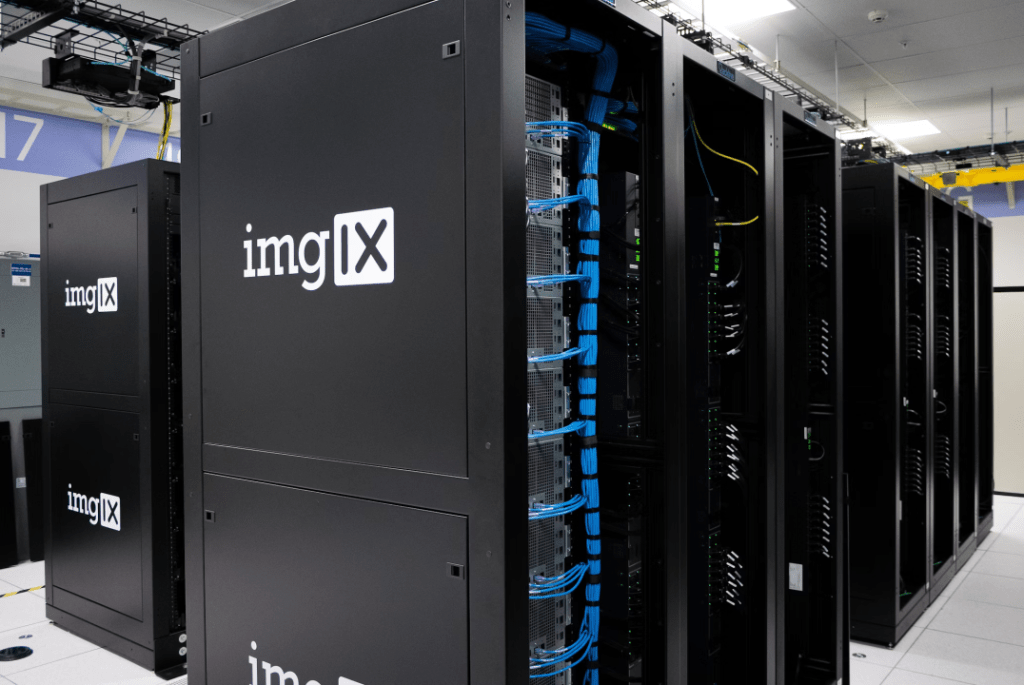
So of course, when people hear about these gigantic rooms filled with hundreds of thousands of these machines, each consuming between 250-1500W, and there being thousands of these facilities all over the world, the question of “how are we going to power these sustainably” is of course, a fair question. According to the International Energy Agency, data centers used about 2% of the global energy consumption in 2022, a number they project will double by 2026. This amounts to what was about 7.4GW of power in 2023, or about 6.1 flux capacitors.
Many companies have pledged to source their data center energy from renewable resources, which is why several data centers are clustered around rivers, where they are powered by hydroelectricity, or otherwise other renewables. Some data centers are even looking to nuclear power as an alternative, cleaner energy source, with designs for modular nuclear power batteries as an option.
However, massive data center locations, such as in Virginia–where over 300 data centers process over 70% of the world’s global internet traffic, are struggling to power themselves with pure renewables, with recent booms in data center growth pushing the Virginia data centers to recommission nearby coal power plants. The overwhelming demand for AI (and money printing machines, whose sole purpose is to buy more money printing machines), cloud computing, and Big Data is necessitating a huge surge in data center growth, but the current rate of expansion in the data center industry is becoming unsustainable–at least, if these companies want to meet their Green Energy KPIs.
The data center industry is being fanned by the flames of Big Data, AI, and cryptomining–each consuming a more flabbergasting amount of resources for the smallest trickle of payoff. A Generative AI query uses 10-25 times more energy than a vanilla Google search (albeit with Search Generative Experience off, I assume), and is often incredibly confidently incorrect about its answer. I had asked Gemini recently about brown dwarfs and how common “black dwarfs” would be, and Gemini confidently asserted exist stars with surface temperatures of -400 degrees Celsius… far colder than the literal coldest possible temperature of -273.15 degrees Celsius, absolute zero.
These Dunning Kruger machines are being overwhelmingly relied on to produce false, if not outright dangerous information that are corrupting the minds of the layperson and our children (I had heard a story of a student who was asked to look something up and confidently pulled up an entirely incorrect answer from ChatGPT–and he asserted ChatGPT was correct and the teacher was incorrect), all while using an absurd amount of power. Each query is the equivalent of dumping out a bottle of water, and I certainly have had days where I performed a hundred queries (although, no worse than my daily bath) on Gemini.
Cloud computing is experiencing steady growth, with the three Cloud behemoths of GCP, Azure, and AWS constantly competing and overtaking one another for who has the highest market share of the Cloud. Each cloud constantly releasing new services, new AI services that too, axing old ones, and trying to stay relevant in the ever changing, ever shifting tides of the IT landscape. Every year, each Cloud Service Provider opens up a new region, deploys a new interconnect, or otherwise appears to expand its data center footprint–much to the chagrin of the locals (although, I would never complain for a local data center, and in fact get very excited every time I drive past HostDime locally, of which locals are dubbing the new I-4 Eyesore), especially since they tend to be very noisy.
Sustainability isn’t simply about carbon offset and managing emissions, as much as it is responsibly constructing with the community in mind, as there have been several protests against the constructions of new data centers. While I do believe the average layperson is not qualified to understand the need for these new data centers, their thoughts of requesting a quiet, peaceful community without giant draping power pylons scouring their landscape are valid and must be considered in pursuit of data center growth. It is important to pursue scientific progress and the necessity for cloud resources, AI, and data center growth, but it is also important that we not regress in our Green Energy initiatives, or otherwise prove to be a nuisance to the communities these data centers get built in.
With the unstoppable growth of the internet and its infrastructure, it is important we not lose sight of sustainability–both in terms of energy resources but also the community impact a new data center would bring. While scalability can “progress” us on one axis, it drastically regresses us on another. Taking care of our planet and our community is of the utmost importance, and we must not scale simply because we can, especially when it would be a detriment to our Earth and Her People–and nobody wants more data centers than I do. Going into the future, the average person will prioritize greener data centers over more powerful ones.
In this ever changing landscape of data center growth, do not forget to make sustainability your #1 priority. Our planet and its people should always be our #1 priority, above all else, no matter what. We only have our one earth, and we must treat it well. Regressing to dirty energy will have a disastrous impact on our planet, as data centers continue to grow ever larger and more prolific. Our planet will thank us in the future.
 Fractal's Thought Emporium